MC4 connections: how to crimp correctly
This Community post connects to our most popular video ever with over 57,000 views, see https://www.youtube.com/watch?v=0W7j5JFwRbU
It's really surprising how many people don't do this correctly and remember, bad joins are a possible point of failure!
High DC voltages
When it comes to commercial solar we are talking about:
Very high DC voltages
In some cases very long runs
It's incredibly important that the connections you make on the solar DC cable are correct
Opposites attract
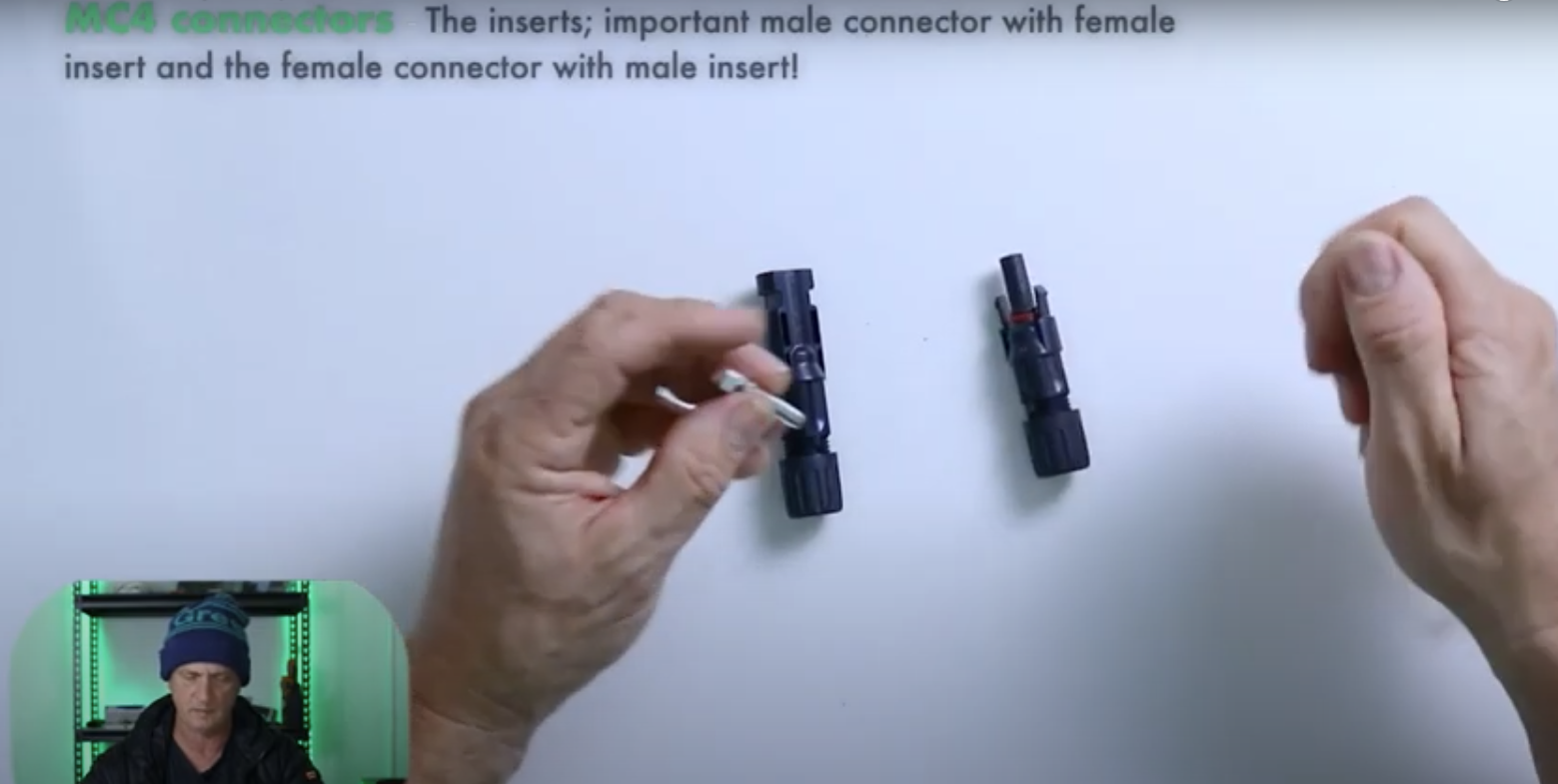
The male MC4 connector goes with the female insert which is hollow and that’s your first pair and the female MC4 connector goes with the male insert.
The cable
Now we're going to have a look at the actual cable and in this case we're using a 6mm cable. A lot of our commercial solar projects involve very long DC runs so of course volt drop is an issue and also the current carrying capacity of the cable comes into play as well.
Stripping the insulation

There are various tools on the market that can be used to strip cable but in the case of solar DC cable I would recommend some purpose made cable strippers as the outer insulation is quite tough.
Remember, do not cut any strands of the conductor!

The cable strippers, best practice
So with these particular cable strippers you can see the action; cable goes in, handles close and the insulation is stripped away.
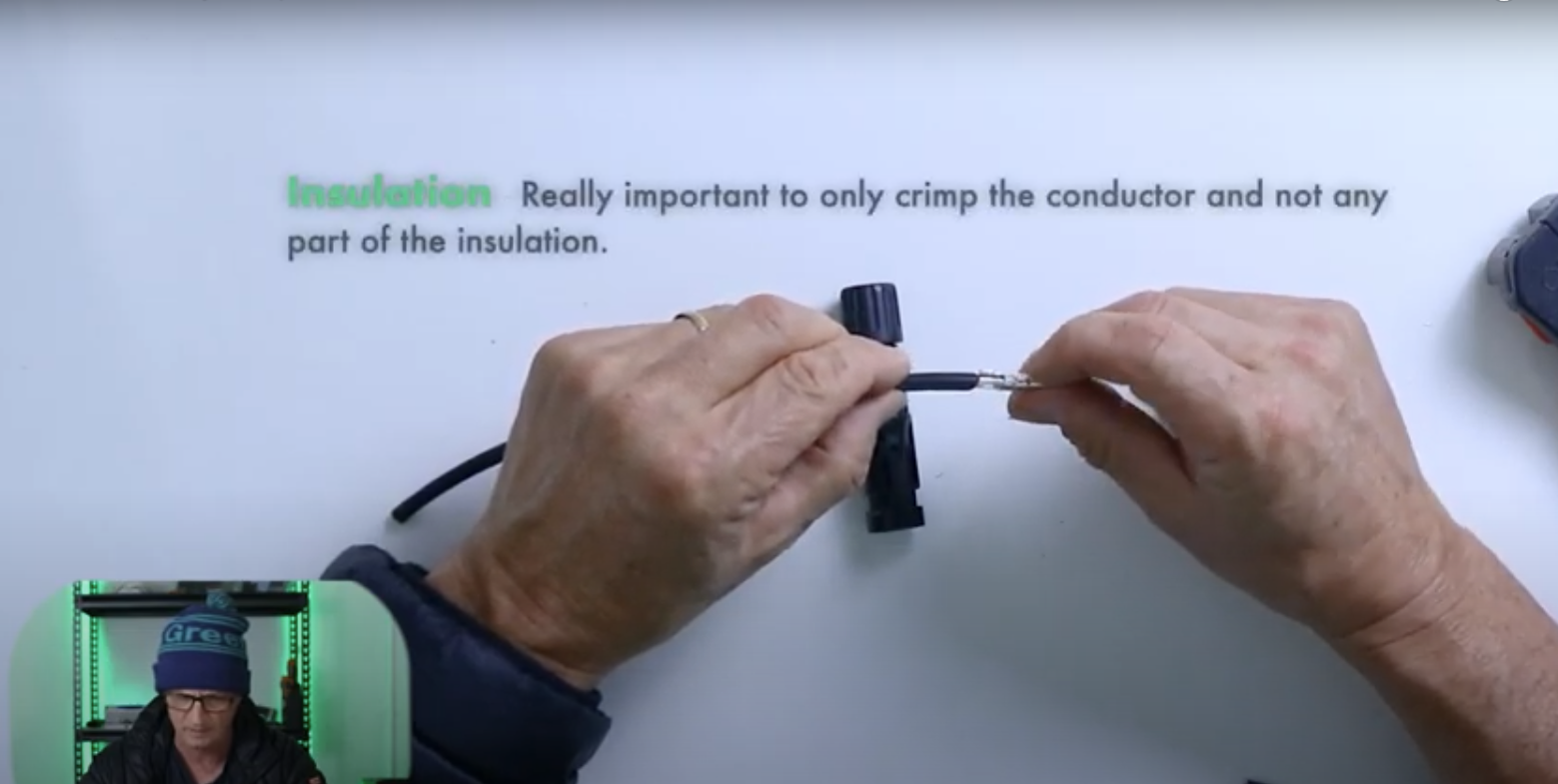
The exposed conductor should be around 10 -12mmm at least so that when inserted into its respective insert the end goes past the tab and where it crimps down it effectively clamps the conductor completely.
The male insert which goes into the female MC4 and the next step is to actually make the crimp.
The crimper

If you turn this crimper over there's some lettering along the side that indicates what size cable can be used.
Insert the insert into the crimper, hold firmly and close slightly.

Insert the cable, making sure that none of the insulation goes past the tab as you only want to crimp the conductor, NOT the insulation.
Then bring it down firmly all the way and completely close the handle and then release. So what happens here is that it crimps down onto the actual multi-strand DC cable that's tinned.
With this cable what you don't do is twist it!
Now some people when they actually take the insulation off and they use a pair of pliers, they twist the insulation and this actually twists the strands. NO NO!
The rule of thumb is if this is not twisted in the first place don't twist it!
When you start twisting the strands within the cable it actually increases in diameter and when you crimp down you can break some individual strands so it's very important not to twist.
Inserting the crimp insert

What I tend to do is take the end off to see what's inside to make sure it's all intact.
There should be a rubber grommet seal that maintains its high IP rate rating. Now it's very important it seats correctly so put it into the female and then push and wait for the click.
When you hear that clip that means it's seated correctly and then just lightly do it up for now.

How the crimp works
The crimper is working by pressing down and forming an M so it's compressing it and this is why it's important that the cable has not been twisted and effectively lays flat inside the crimp.
Tightening the MC4
We are talking high voltages going through these cables and on some solar farms you're talking way over a thousand volts.
On the majority of commercial solar systems roof mount we’re talking, you know, 850 voltage at maximum power point flowing through these cables.

Now we have to pull out a couple of extra tools to tighten these which consist of plastic blue spanners in this case. Place the first spanner over the one end and the other over the end where the cable protrudes.
Hold the spanner over the non cable end in a fixed position and rotate the other spanner in a clockwise direction until you hear an audible click.

Remember there's rubber grommets rubber seals in there and if you tighten past that point you can compromise that seal and therefore compromise the IP rating of these suddenly they don't have an outdoor waterproof rating.
So be very careful you don't over tighten them.
Watch the full video here: https://www.youtube.com/watch?v=0W7j5JFwRbU
Hopefully you have learnt the correct way to create a MC4 connection.
For more training with CPD points we are offering 50% off all courses ( Cannot be used in conjunction with any other offer or discount) available for one week only.
See link here: https://www.greenwood.academy/?coupon=50OFFEVERYTHING
Good luck on your next commercial solar project.